

Conservative Management of Canine Cruciate Disease: When Surgery Isn't the Only Answer
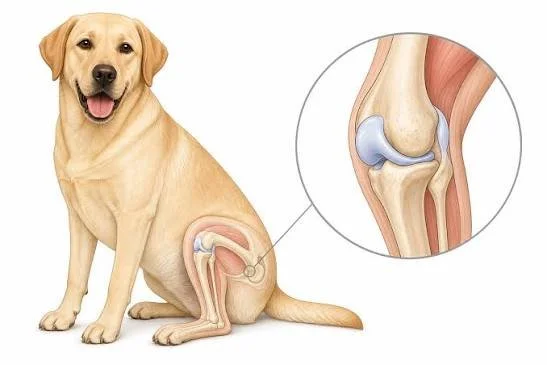
A Practical Guide for Veterinary Professionals and Dog Owners
Cranial cruciate ligament disease (CCLD) remains one of the most common orthopaedic conditions seen in canine practice. While surgical stabilisation is often considered the gold standard for many patients, there is growing recognition that successful outcomes can also be achieved through carefully structured rehabilitation programmes, particularly for dogs awaiting surgery, dogs unsuitable for anaesthesia, or those whose owners are unable to pursue surgical intervention.
At Hydrohounds, we regularly work alongside veterinary professionals to support dogs through every stage of cruciate disease management, from conservative treatment pathways through to post-operative rehabilitation.
The key question is no longer whether rehabilitation helps. The question is how early rehabilitation should begin and what role it should play in improving patient outcomes.
Understanding Canine Cruciate Disease
Unlike acute ACL injuries commonly seen in people, canine cruciate disease is often a progressive degenerative condition. Over time, instability develops within the stifle joint, resulting in pain, inflammation, reduced limb loading, muscle wastage and secondary osteoarthritis.
Clinical signs commonly include:
Intermittent or persistent hindlimb lameness
Difficulty rising from rest
Reluctance to exercise
Muscle atrophy of the affected limb
Reduced activity levels
Joint discomfort following activity
Without appropriate intervention, compensatory movement patterns can lead to wider musculoskeletal problems and significantly reduced quality of life.
When Conservative Management May Be Appropriate
While surgery remains the preferred option for many cases, conservative management may be recommended when:
Dogs Are Awaiting Surgery
Rehabilitation prior to surgery can help improve muscle mass, maintain joint mobility and prepare patients for a more successful recovery. A stronger patient often enters surgery in a better physical condition and may recover more efficiently afterwards.
Medical Comorbidities Increase Surgical Risk
Older dogs or those with concurrent health conditions may not be ideal candidates for immediate surgical intervention. A structured rehabilitation programme can help manage pain, improve mobility and preserve function whilst alternatives are considered.
Financial Constraints Limit Surgical Options
Not every owner can realistically pursue specialist orthopaedic surgery. Evidence increasingly suggests that selected patients can experience meaningful functional improvement through weight management, controlled exercise, hydrotherapy and targeted rehabilitation plans.
Post-Operative Rehabilitation Is Required
Even following successful TPLO, TTA or extracapsular procedures, surgery is only part of the recovery journey. Restoring strength, confidence, movement quality and functional mobility requires a structured rehabilitation programme tailored to the individual dog.
The Four Pillars of Effective Cruciate Rehabilitation
Evidence-Based Rehabilitation Protocols
Successful rehabilitation should never rely solely on rest. Modern rehabilitation focuses on:
Pain reduction
Controlled limb loading
Progressive strengthening
Gait normalisation
Functional movement retraining
Interventions may include:
Hydrotherapy (Pool & Underwater Treadmill)
Veterinary Physiotherapy (Therapeutic exercise programmes, Balance and proprioception work, Range of motion exercises, Functional strengthening activities, Massage & Laser Therapies)
Acupuncture
Every programme should be individually adapted based on clinical findings and patient progress.
2. Weight Management: The Most Underrated Treatment
One of the strongest predictors of successful outcomes in cruciate disease is effective body weight management. Excess body weight increases forces passing through the stifle joint and can accelerate degenerative changes. A comprehensive rehabilitation strategy should include:
Body condition scoring
Nutritional guidance
Exercise planning
Regular monitoring
Weight loss alone can significantly improve comfort and mobility in many orthopaedic patients.
3. Preserving Muscle Mass During Recovery
Muscle atrophy develops surprisingly quickly following injury or surgery. The quadriceps, hamstrings and gluteal muscle groups play a critical role in stabilising the hindlimb. Without intervention, muscle wastage contributes to:
Ongoing weakness
Poor biomechanics
Delayed recovery
Increased compensatory injuries
Hydrotherapy offers a particularly valuable solution because it allows dogs to exercise within a low-impact environment while maintaining muscle engagement. This can be especially beneficial during periods where full weight-bearing exercise on land remains restricted.
4. Establishing Realistic Return-to-Function Timelines
Every patient is different. One of the most important aspects of rehabilitation is setting realistic expectations for owners and veterinary teams. Recovery is influenced by:
Breed
Age
Body condition
Severity of disease
Concurrent orthopaedic issues
Owner compliance
Rather than focusing solely on timelines, rehabilitation should be guided by objective functional milestones such as:
Improved weight-bearing
Improved gait symmetry
Increased muscle circumference
Improved endurance
Return to normal daily activities
Success should be measured by function, not just time.
Why Veterinary Practices Are Increasingly Referring Earlier
Veterinary surgeons encounter cruciate cases every week. What many practices are seeking is a reliable rehabilitation partner capable of delivering evidence-based support, clear communication and measurable outcomes. Early referral can help:
Reduce muscle loss before surgery
Improve owner engagement
Enhance post-operative outcomes
Support conservative management cases
Improve patient quality of life
Provide ongoing objective monitoring
Rehabilitation and hydrotherapy are no longer viewed as optional extras. They are increasingly recognised as integral components of modern orthopaedic care.
The Hydrohounds Approach
At Hydrohounds, we believe successful cruciate disease management requires a collaborative approach between veterinary surgeons, rehabilitation professionals and dog owners. Every treatment programme is tailored to the individual patient and designed around:
Clinical assessment findings
Veterinary recommendations
Functional goals
Safe progression milestones
Long-term mobility preservation
Whether a dog is awaiting surgery, recovering from a TPLO procedure, or being managed conservatively, our aim is to maximise function, minimise discomfort and support the best possible outcome.
Looking Ahead: Rehabilitation Is Becoming Standard of Care
The future of canine orthopaedic management lies in multidisciplinary care. As veterinary medicine continues to evolve, rehabilitation professionals are playing an increasingly important role in helping dogs maintain mobility, recover from injury and enjoy a better quality of life. For cruciate disease, surgery may be one tool in the toolbox, but successful outcomes depend equally on what happens before and after the operation. The strongest outcomes are often achieved when rehabilitation begins early and remains a core part of the treatment plan